Latest News

Reshaping the Head: Treating Unilateral Coronal Synostosis
A baby’s brain grows rapidly before birth and during infancy. The brain has room to grow, because, early on, the head is not solid. Instead, it consists of a number of bones, known as plates, separated by narrow openings. As the brain enlarges, the plates also gradually grow toward each other. The junctions where the plates meet are called sutures.
Handling Teasing and Making Friends
We all have differences. Our looks or how we speak or act can make other people curious about us and may lead to teasing and bullying. Children and teens with facial differences can sometimes feel left out or put down through no fault of their own. Preparing for attention and questions from classmates, strangers, or others can help build confidence in social situations.

Evaluation Begins with Baby Talk
Children with cleft lip and palate and other craniofacial conditions generally have normal language development — learning of words and sentence structure — but may have problems producing the different sounds necessary for speech. Speech-language pathologists, who have completed a two-year master’s degree program as well as a fellowship, are important members of the craniofacial team at Children’s Hospital Boston.
FFC’s first Teen and Young Adult Forum
“I’m excited to finally be with my ‘peeps,’” said Olivia Chartand of Ludlow, Massachusetts, at FFC’s first Teen and Young Adult Forum, held at Children’s Hospital Boston. Never before had she had the opportunity to meet others like her born with cleft lip and palate.

In Gratitude – Jane McDaid
Our heartfelt thanks to Jane McDaid, who recently resigned from her position as FFC co-president after leading the organization for seven years.

Growing Up Together
All sibling relationships have their ups and downs and tend to be a blend of loyalty and rivalry. “Families in which a child has a craniofacial difference are more alike than different from other families,” says Elisa Bronfman, PhD, a staff psychologist in the Medical Coping Clinic at Children’s Hospital Boston.
An Inside View
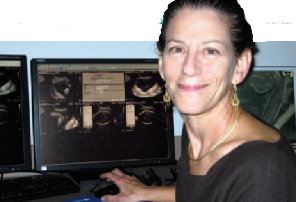
Advanced imaging technology is giving physicians and parents a high-definition view of babies before birth. Three-dimensional (3-D) ultrasound and magnetic resonance imaging (MRI) produce detailed pictures that enable physicians to visualize the growing fetus and diagnose facial conditions, such as cleft lip and palate.

Changing Faces and Lives
As a medical social worker, Cassandra L. Aspinall, MSW, discusses face-altering procedures with children and their parents to make sure their expectations are realistic.“It’s fine if someone thinks,‘I will be more positive about myself if my nose looks better,’” says Aspinall.“But there’s nothing worse than a child thinking an operation is all that’s needed to improve the chances of having a boyfriend or girlfriend or to be accepted by the popular kids for the first time.”

Relief from Ear Infections
New research suggests that taking a “wait-and-see” approach to the treatment of ear infections may be best. A recent study, published in the Journal of the American Medical Association, found that 62%, or nearly two-thirds, of children diagnosed with a middle ear infection got better on their own—without antibiotics—within 48 hours.
Upcoming Events
Every year the Foundation for Faces of Children organizes and executes several social and fundraising events to support the programs offered to families and children.